7 Best Naamjap App Features Every Devotee Needs for a Powerful Daily Sadhana in 2026
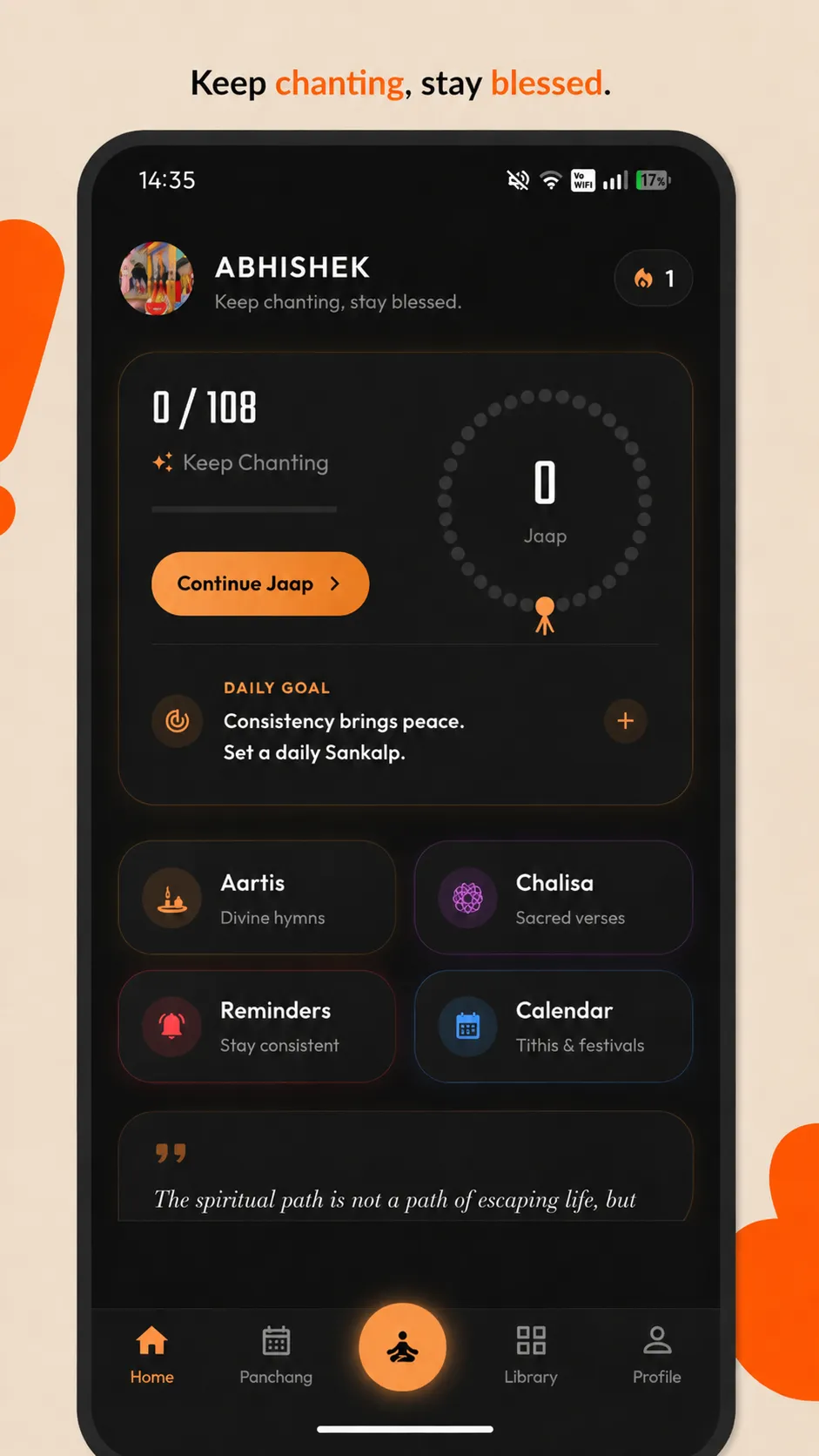
Did you know that over 80% of devotees who start a mantra chanting routine abandon it within 30 days — not from lack of faith, but from lack of the right tool? If you have searched for the best naamjap app, you already know that juggling a physical mala, a notebook tally, and a phone timer is a recipe for distraction, not devotion.
The struggle is real: you sit down for your morning Sadhana, but your knotted mala keeps slipping, your count resets by accident, and you have no idea whether this auspicious hour aligns with today's Panchang. The result is frustration where there should be peace.
In this guide, you will discover the seven features that separate a truly powerful digital Sadhana tracker from a basic tally app — without the overwhelm of testing dozens of tools yourself.
Amritaam is the team behind Jaapkaro, a haptic-powered digital Sadhana tracker that has helped thousands of devotees build consistent, lifelong chanting routines and log millions of cumulative mantra counts — with zero intrusive in-chant ads.
What Is the Best Naamjap App and Why Does It Replace Your Physical Mala?
For centuries, devotees have used a mala of 108 beads to count mantra repetitions during Japa meditation. A naamjap app brings the same function to your smartphone — but adds precision, persistence, and features no string of beads can offer.
Studies in habit formation consistently show that tracking behaviour raises completion rates. Research by Phillippa Lally at University College London (2010), published in the European Journal of Social Psychology, found that automating a daily ritual into a consistent cue-routine-reward loop takes an average of 66 days — making a reliable digital tracker more than a convenience; it is a spiritual infrastructure investment.
How Does a Haptic Naam Jap Counter Work?
A naam jap counter that relies on haptic feedback lets you keep your eyes closed and your focus inward. Every tap on the screen sends a subtle vibration to confirm the count — no glancing at the screen, no miscount, no broken dharana.
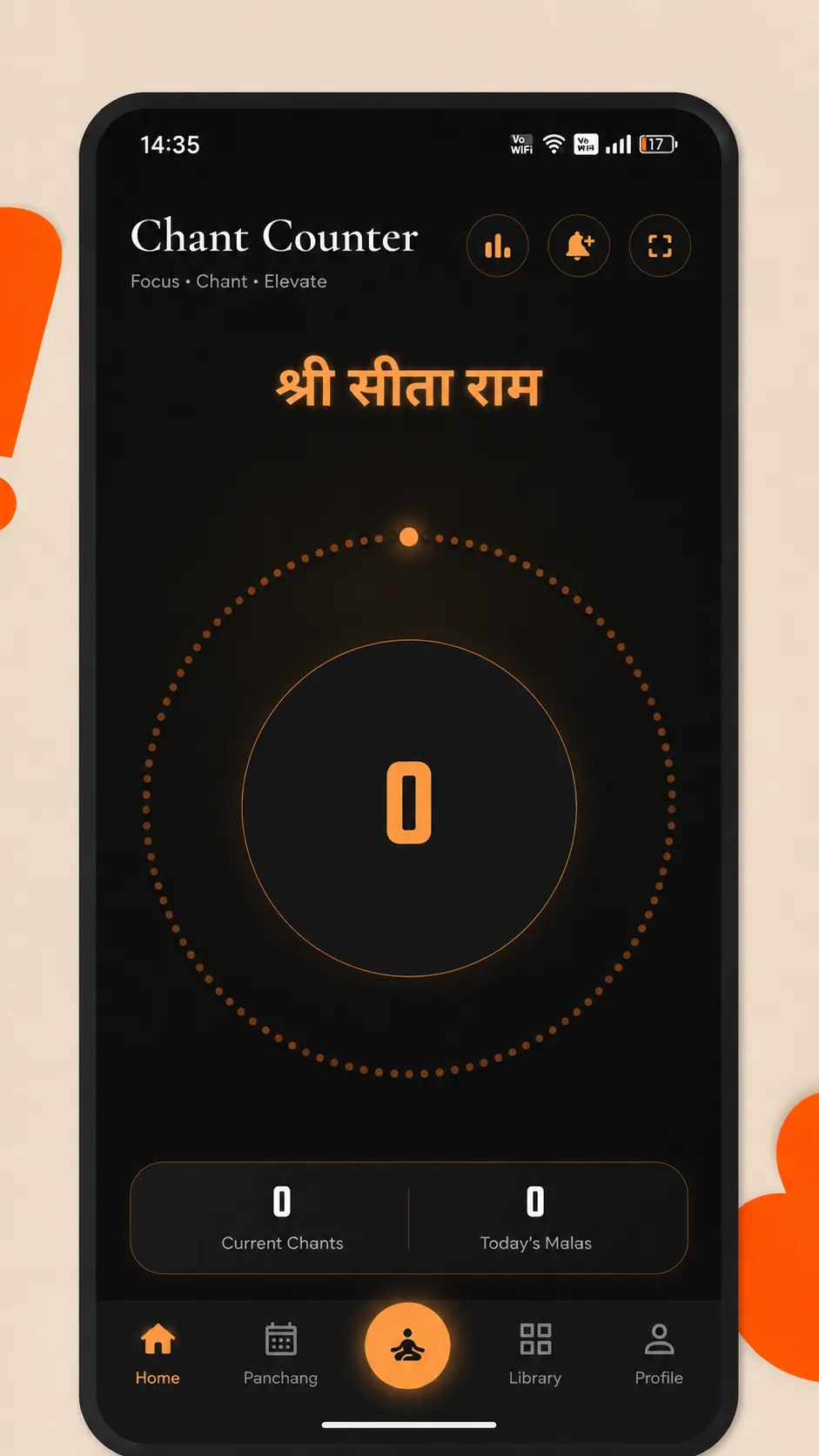
Jaapkaro's haptic counter uses Android's vibration API to fire a precisely timed pulse on each count. This mirrors the tactile feedback of moving a mala bead — preserving the kinaesthetic anchor of traditional Japa while adding a digital ledger that never forgets your count.
Why Full-Screen Tapping Matters
Counting with tiny buttons drains focus because you have to constantly check if your finger is in the right place. The best Sadhana apps feature a full-screen tap-to-count canvas. Jaapkaro is designed so you can tap anywhere on the screen to log your Japa, allowing you to count comfortably with your eyes closed.
Setting Your Sankalpa Target
A sankalpa is a sacred resolve — a fixed number of repetitions you commit to daily or over a set period. A good jaap counter lets you set a target (108, 1008, 10,008), shows a progress ring, and alerts you when you reach it. This turns a vague intention into a trackable vow.
Why Your Daily Sadhana App Must Work Offline
Network connectivity should never interrupt your morning prayer. Whether you are in a village with patchy data or in a flight mode meditation retreat, your daily Sadhana app must function completely without the internet.
Offline readiness is not a bonus feature — it is a baseline requirement. Reports by the TRAI (Telecom Regulatory Authority of India) note that rural mobile internet availability still experiences significant coverage gaps in several states. Devotion cannot wait for a signal.
Jaapkaro stores your session statistics on-device, and caches the library of Aartis and Chalisas automatically after the first load. Your counts, streaks, and prayers are available offline when you open the app — ensuring a smooth, data-independent spiritual workspace.
How to Use Offline-Ready Aartis and Chalisas Inside Your App
The Aarti and Chalisa are cornerstones of Hindu daily worship. Having offline-ready aartis and chalisas built into your naamjap app means you carry a complete pocket prayer book wherever you go.
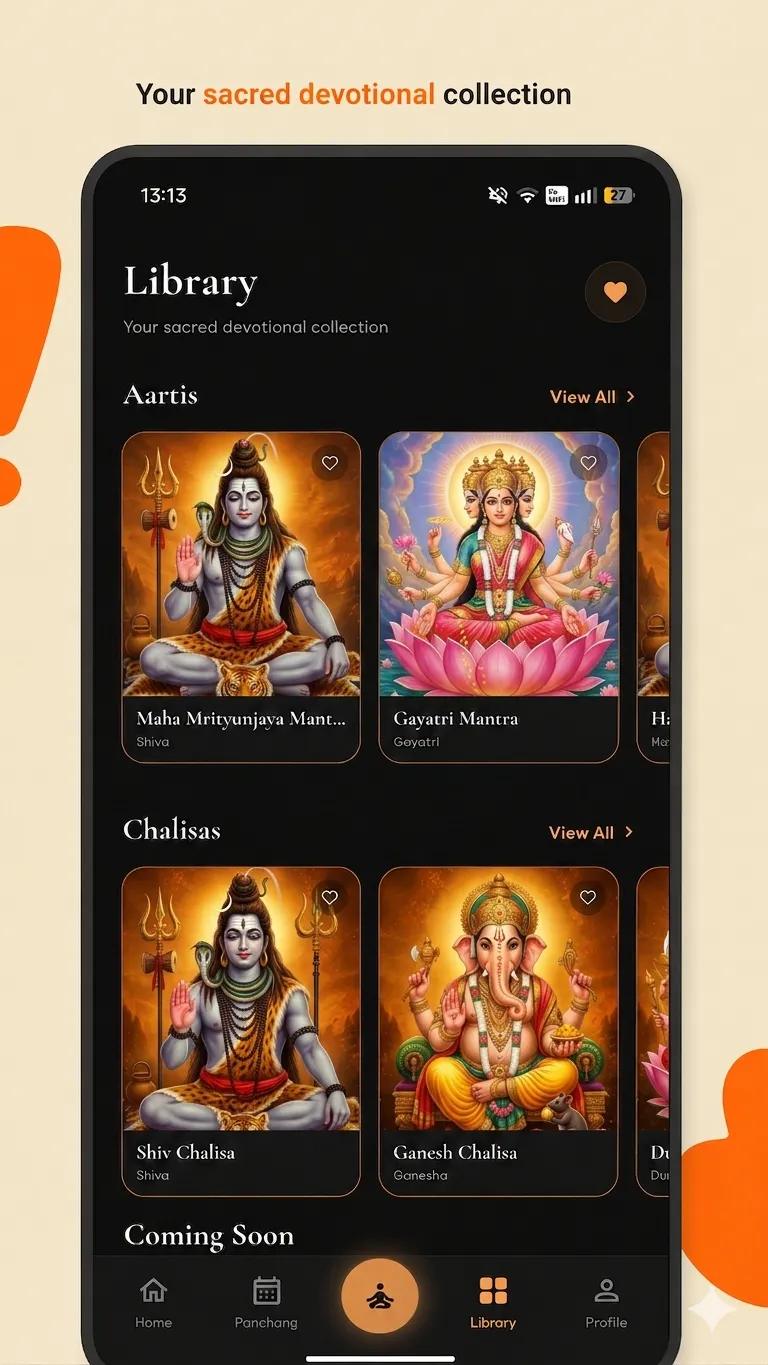
Jaapkaro includes a growing, offline-ready library of popular Aartis and Chalisas in Hindi and English transliteration. Once cached, users can read their evening Aarti during power cuts, on mountain pilgrimages, or in Puja rooms with no internet connection — completely without interruption.
Languages and Transliteration
For devotees comfortable with Roman script or regional languages, offering transliteration alongside Devanagari makes sacred texts accessible across generations and literacy levels. Look for an app that respects both traditions.
What Is a Hindu Panchang Calendar and How Does It Guide Sadhana Timing?
The Hindu Panchang calendar tracks the sacred daily elements of the lunar cycle, including Tithis and major festivals. Knowing today's Tithi helps devotees identify auspicious dates (like Ekadashi, Purnima, and Amavasya) for Japa and Sadhana.
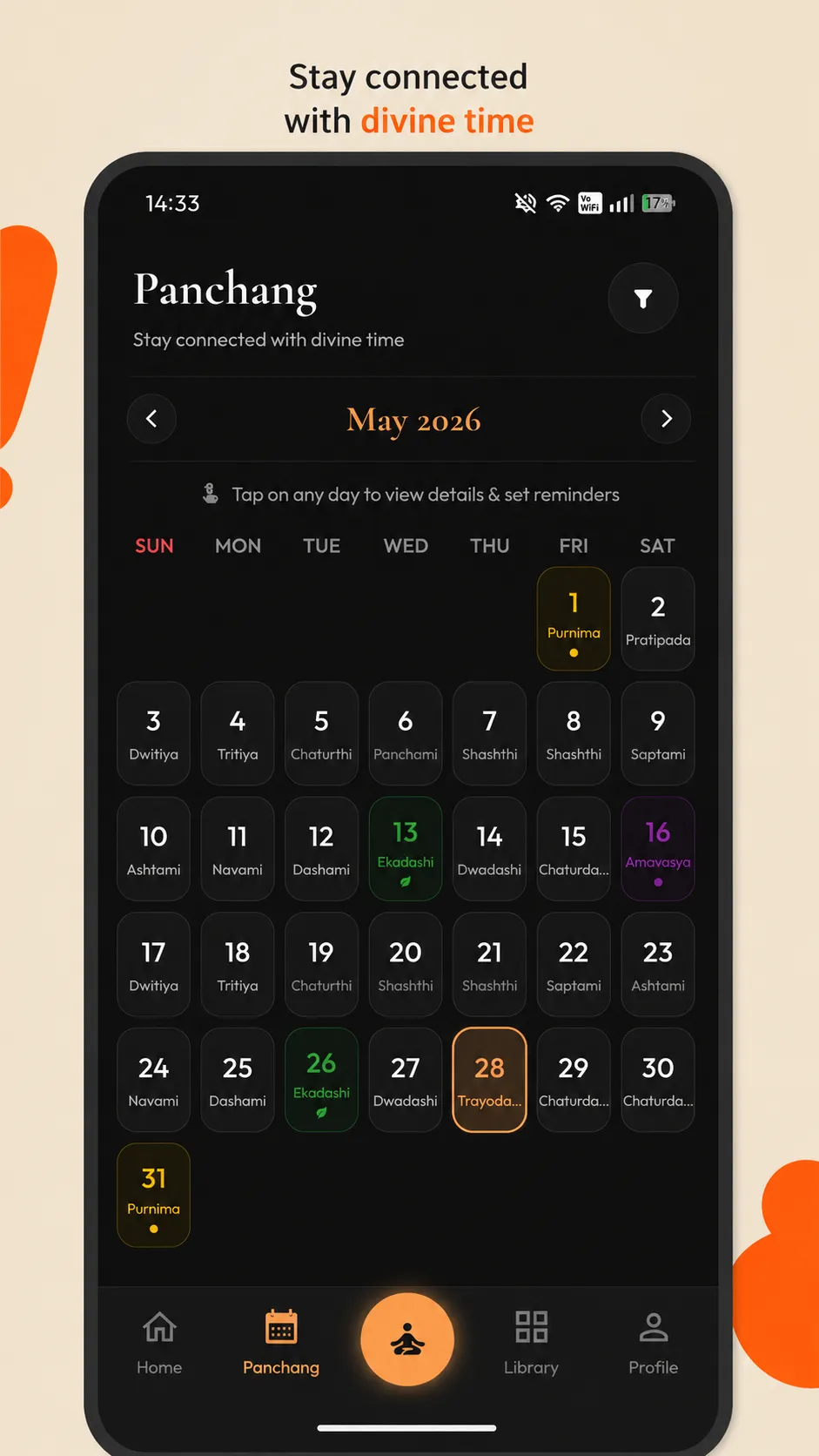
Integrating a live Panchang calendar into a naamjap app means you no longer need to consult separate printed almanacs. You see today's Tithi, Ekadashi status, and upcoming festivals at a glance — inside the same app where you count your mantras, accompanied by notifications on auspicious days. (Read more on our Features overview).
Trust and Authority: What Consistent Daily Practice Actually Produces
"Consistency in Sadhana is more powerful than intensity. Ten minutes every day for ten years will transform you far more than a hundred-hour retreat once a decade."
— Swami Sivananda, Divine Life Society, Rishikesh (frequently cited in classical texts on Japa Yoga)
At Amritaam Network, we have observed this firsthand across the Jaapkaro user community. Devotees who enable the app's daily reminder and set a modest sankalpa of just 108 counts per day show dramatically higher 30-day and 90-day retention than those who attempt large counts without structure. Our internal data from millions of logged sessions shows that streaks of seven consecutive days are the single strongest predictor of a lifelong daily Sadhana habit. This is an insight that no algorithm alone can generate — it comes from listening to the devotees who use the app daily and studying the patterns their practice leaves behind.
How to Choose the Best Naamjap App: A Quick Comparison Framework
When comparing apps, check these five things: Does the counter support eyes-closed full-screen tapping? Does it include offline-ready Aartis and Chalisas? Does it show today's Hindu Panchang timings? Is there zero advertising during active chanting? Does it track cumulative counts and streaks across days? (Review our comprehensive frequently asked questions to understand how local counts and backup sync behave).
Jaapkaro was designed to answer yes to all five. It is free to download, contains no intrusive in-chant ads, and has helped devotees across India log millions of cumulative mantra counts.
| Feature | Physical Japa Mala | Generic Tally Apps | Jaapkaro (Japkaro) |
|---|---|---|---|
| Eyes-Closed Tap | Yes | No (requires screen check) | Yes (calibrated haptics) |
| Daily Streak Tracking | No | No | Yes (habit mechanics) |
| Vedic Almanac (Panchang) | No | No | Yes (built-in) |
| Offline Reading Library | No | No | Yes (offline-ready) |
| Zero Ads During Active Chanting | Yes | No (frequent screen popups) | Yes (ads strictly blocked) |
Conclusion
The right naamjap app removes every obstacle between you and a consistent daily Sadhana. We have covered the seven features that matter most: haptic naam jap counting, offline Sadhana tracking, Panchang integration, built-in Aartis and Chalisas, sankalpa target setting, full-screen chanting, and streak-based habit building. Together, these features turn your smartphone into a complete, distraction-free digital mala. The best naamjap app is not the one with the most features — it is the one you open every morning without thinking.